
 Save to Pinterest
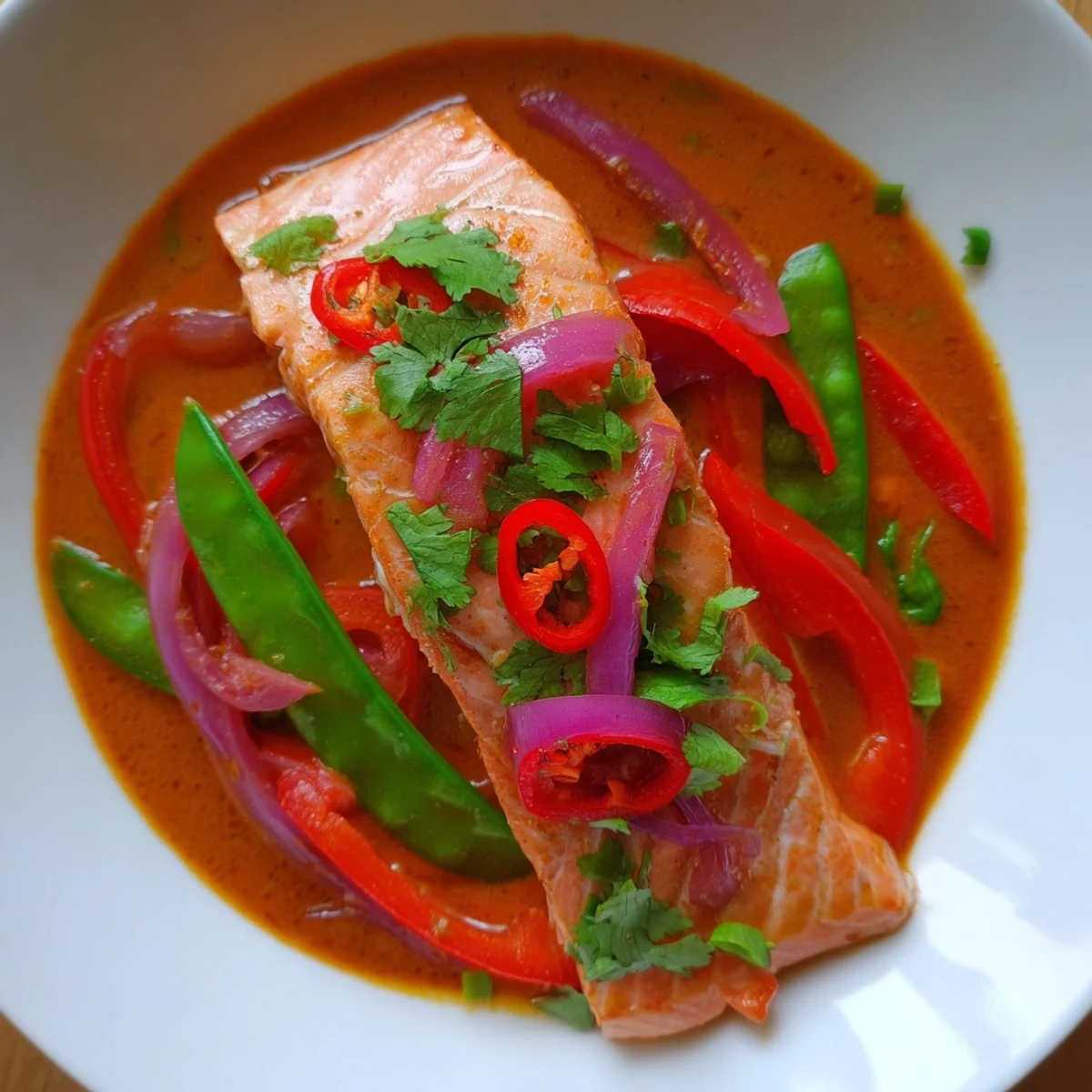
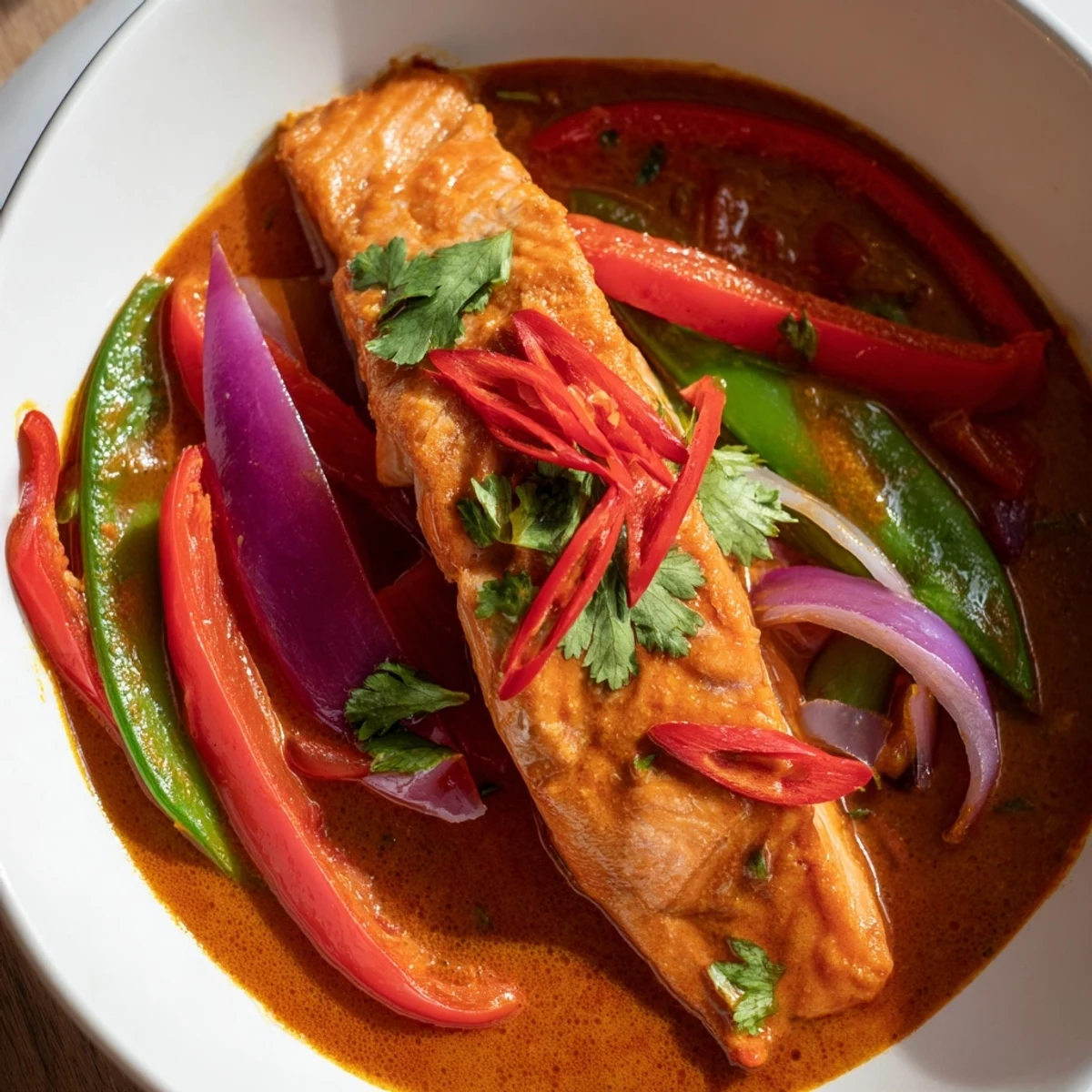
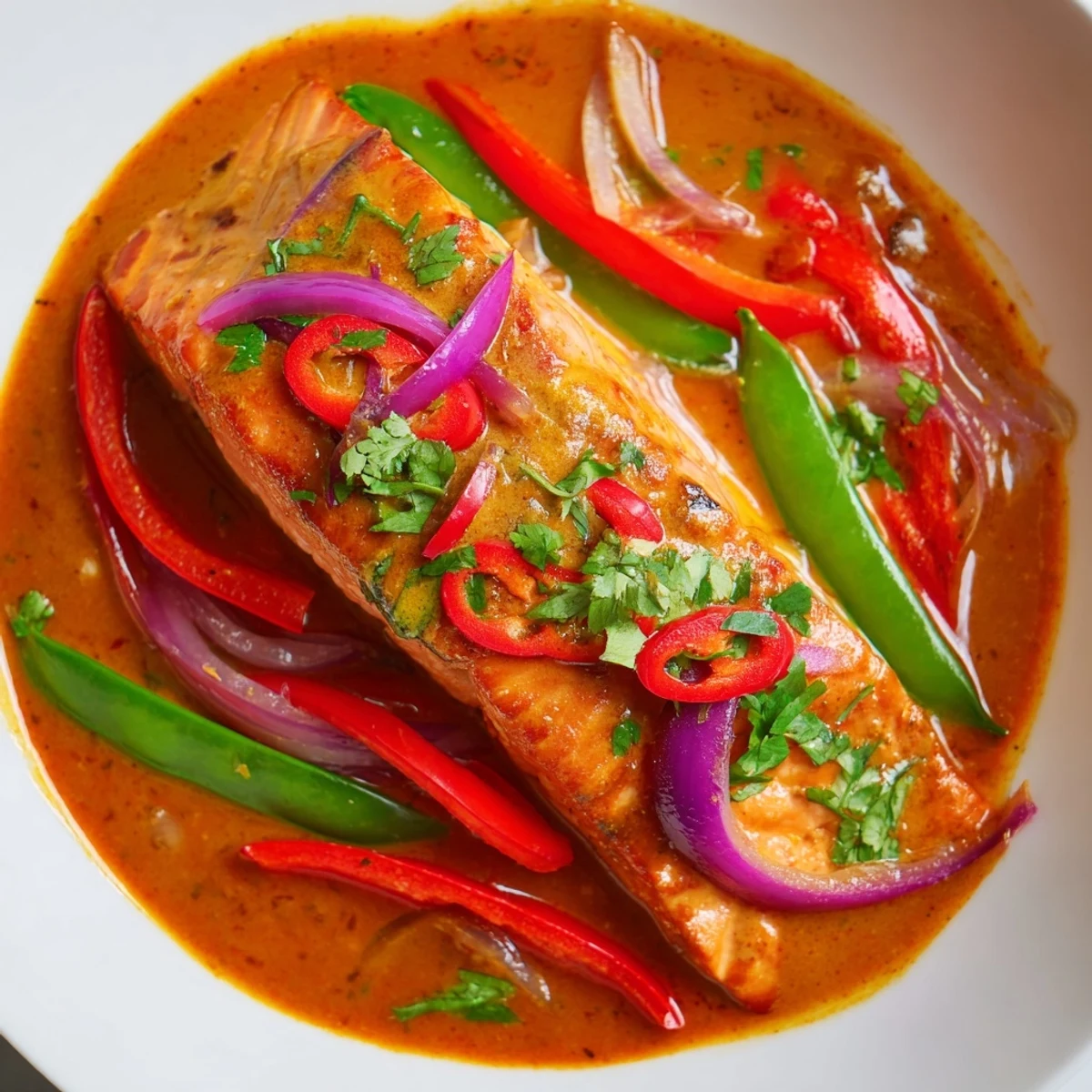
 This vibrant Thai-inspired salmon brings together rich coconut milk, aromatic red curry paste, and fresh coriander for a dish that's both comforting and exciting. The salmon simmers gently in the fragrant sauce, absorbing the complex flavors while staying moist and tender. Crisp red bell peppers and sugar snap peas add texture and freshness, balancing the creamy coconut base with their natural sweetness. Perfect for busy weeknights when you want something special but don't want to spend hours in the kitchen. Serve over fluffy jasmine rice to soak up every drop of the luscious curry sauce.
The aroma of red curry paste hitting hot oil still transports me back to my tiny apartment kitchen, where I first attempted to balance the bold flavors of Thai cooking. My roommate leaned against the doorframe, skeptical about salmon in coconut milk, but one spoonful changed her mind completely.
Last winter, during a particularly brutal week of deadlines, this dish became my go-to comfort food. Something about the warmth of curry and the tenderness of poached salmon felt like a hug, even when eating alone at midnight.
Ingredients
- 4 salmon fillets: Skinless works best here so the sauce can infuse the fish directly, though skin-on is fine if you prefer crispy skin later
- Vegetable oil: A neutral oil helps bloom the curry paste without interfering with the delicate coconut flavors
- Thai red curry paste: This is the flavor powerhouse so do not skimp, and look for brands with visible galangal and kaffir lime
- Coconut milk: Full fat is essential here because the richness carries all those complex spices and creates that velvety restaurant texture
- Fish sauce: The salty umami backbone that makes everything taste more like itself
- Brown sugar: Just enough to round out the sharp edges of the curry and bring everything into harmony
- Lime juice: Fresh is non negotiable here as it cuts through the coconut richness and brightens each bite
- Red bell pepper: Adds sweetness and a beautiful pop of color that makes the dish look as good as it tastes
- Sugar snap peas: Their natural sweetness and crunch provide the perfect contrast to the tender salmon
- Red onion: Thin slices become sweet and mellow as they poach in the coconut broth
- Fresh coriander: The finishing touch that adds brightness and makes everything taste fresh and alive
- Fresh red chili: Optional but recommended if you want that extra layer of heat at the end
Instructions
- Wake up the curry paste:
- Heat oil in your skillet until it shimmers slightly, then add the red curry paste. Let it sizzle and bubble for about a minute, stirring constantly until the oil separates slightly and the kitchen fills with that intoxicating roasted spice aroma.
- Build the coconut broth:
- Pour in the coconut milk and whisk until smooth and combined. Add fish sauce, brown sugar, and lime juice, then bring everything to a gentle bubble while stirring to dissolve the sugar completely.
- Add the vegetables:
- Toss in the sliced bell pepper, snap peas, and red onion. Let them simmer for 3 to 4 minutes until they start to soften but still maintain some crunch, which creates lovely texture throughout the dish.
- Gently poach the salmon:
- Carefully place each salmon fillet into the simmering sauce. Cover the skillet and reduce heat to low, letting the fish cook in the flavorful liquid for 10 to 12 minutes until it flakes easily and turns opaque throughout.
- Season and finish:
- Taste the sauce and adjust with more lime juice for brightness or fish sauce for salt. Scatter fresh coriander and sliced chili over the top, letting the residual heat gently wilt the herbs.
 Save to Pinterest
 My aunt, who claims she cannot cook anything beyond toast, made this for a dinner party and received three requests for the recipe. The simplicity of poaching fish in coconut milk feels like a secret weapon.
Making It Your Own
I have swapped in basa fillets when salmon felt too pricey, and the result was still exceptional. For a vegetarian version, cubes of firm tofu work beautifully with the same cooking time, just use soy sauce instead of fish sauce.
Rice Perfection
Jasmine rice is the classic choice here, but I have served this over coconut rice for extra richness, or even cauliflower rice for a lighter weeknight version. The sauce is flavorful enough to make any base taste delicious.
Timing Everything
Start your rice before you begin prep, because this curry comes together faster than you might expect. Having everything chopped and measured before you heat the oil makes the whole process feel effortless and calm rather than rushed.
- The salmon continues cooking slightly as it rests in the warm sauce, so remove it just before you think it is done
- Leftovers taste even better the next day as the spices meld and develop deeper flavors
- If making ahead, reheat gently to prevent the coconut milk from separating
 Save to Pinterest
 This recipe reminds me that some of the most satisfying meals come from the simplest techniques. Sometimes poaching fish in coconut milk feels like the most elegant thing you can do on a Tuesday night.
Recipe FAQs
- → Can I use frozen salmon for this dish?
-
Yes, frozen salmon works well. Thaw it completely in the refrigerator before cooking and pat it dry with paper towels to remove excess moisture. This helps the salmon sear properly and absorb the curry flavors better.
- → How can I adjust the spice level?
-
The heat comes primarily from the red curry paste. Start with 1 tablespoon for a mild-medium heat, or add more if you prefer it spicier. The fresh red chili garnish adds extra kick, so serve it on the side for those who want more heat.
- → What vegetables work best in this curry?
-
Red bell pepper and sugar snap peas are ideal because they hold their texture during simmering. You can also try green beans, broccoli, baby corn, or bamboo shoots. Add heartier vegetables like carrots or potatoes earlier in the cooking process.
- → Can I make this vegetarian?
-
Absolutely. Replace the salmon with firm tofu cubes and use soy sauce instead of fish sauce. Press the tofu beforehand for better texture, and add it during the last 5-8 minutes of cooking to prevent it from breaking apart.
- → How do I store leftovers?
-
Store in an airtight container in the refrigerator for up to 2 days. Reheat gently over low heat, adding a splash of coconut milk or water if the sauce has thickened too much. The salmon may be more delicate when reheated, so handle it carefully.
- → What type of curry paste should I use?
-
Look for a good-quality Thai red curry paste in a jar or can at Asian markets or well-stocked supermarkets. Brands like Mae Ploy or Maesri are authentic options. Avoid curry powders as they won't provide the same depth of flavor.