
 Save to Pinterest
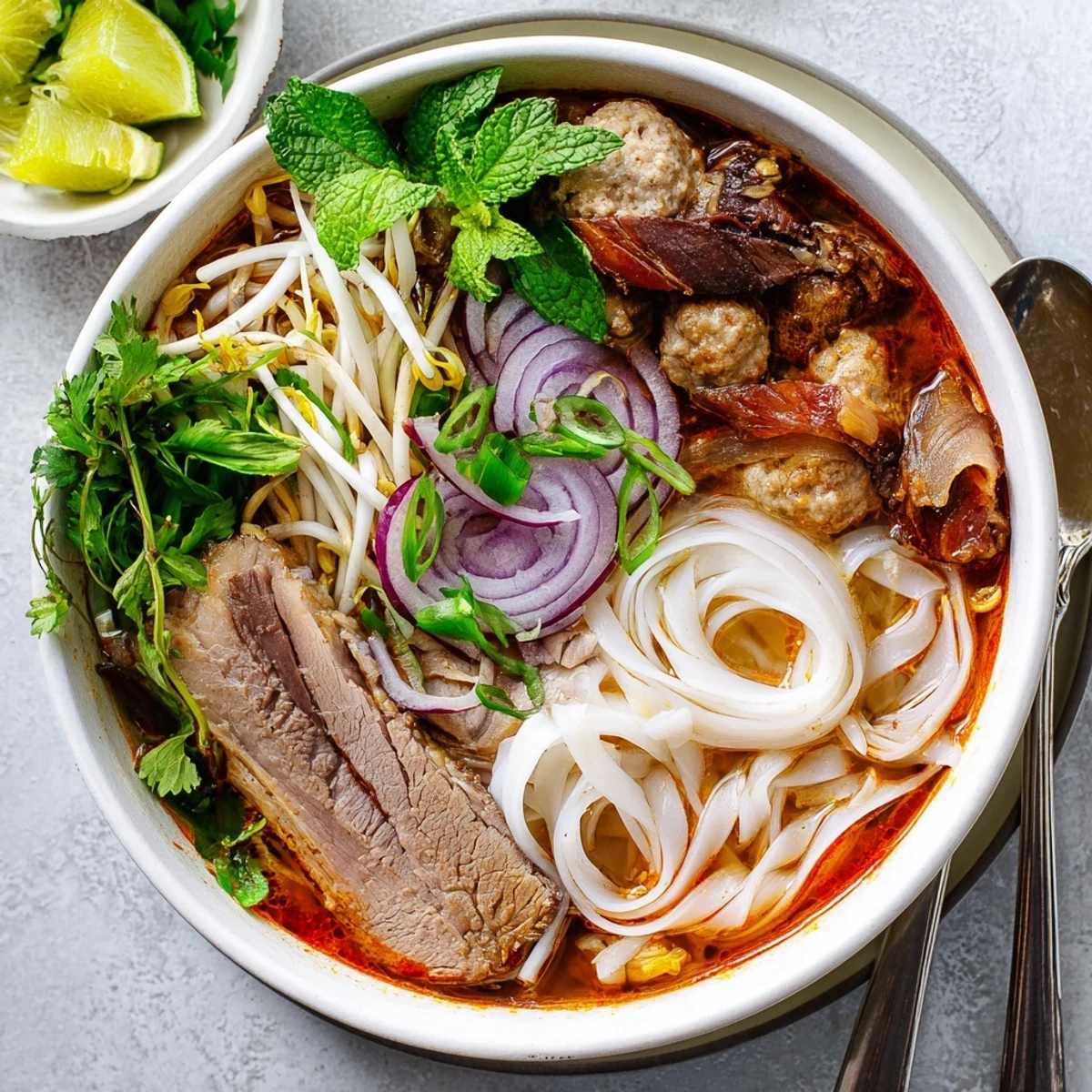
 Bun Bo Hue brings the bold, spicy flavors of central Vietnam to your kitchen. This iconic dish features a rich, slow-simmered broth infused with lemongrass, shrimp paste, and aromatic vegetables, served over thick rice noodles with tender beef shank, pork hock, and Vietnamese sausage. The signature element is a vibrant red chili oil that adds both stunning color and customizable heat.
While requiring three hours total time, most cooking is hands-off simmering that develops deep, complex flavors. The result is a soul-warming bowl that balances spicy, savory, and fresh notes with generous garnishes of herbs, bean sprouts, and lime. Perfect for sharing with family or impressing guests with authentic Vietnamese cuisine.
My grandmother would wake at dawn to start the broth, the lemongrass and shrimp paste announcing themselves long before any of us stumbled into the kitchen. She insisted that Bun Bo Hue required patience, that the spicy, aromatic soul of Hue could not be rushed. I've carried that kitchen rhythm with me, adjusting her methods until they fit my own chaotic mornings while still honoring the bowl she taught me to love.
Last winter, I made a massive pot for friends who'd never tried central Vietnamese cuisine. They watched me assemble the bowls with all the garnishes, eyes widening at the deep red broth and the tower of fresh herbs. By the end of the night, one friend was already texting me for the recipe, asking if there was any way to capture that first spicy, fragrant spoonful in words.
Ingredients
- Beef shank bone in: This cut becomes meltingly tender during the long simmer while adding essential body and richness to the broth that bones alone cannot provide.
- Pork hock: The collagen breaks down beautifully, creating silkiness in the soup while offering a satisfying, meaty texture in every bite.
- Lemongrass stalks: Bruising them releases their citrusy oils, infusing the broth with the distinctive bright fragrance that defines this dish.
- Shrimp paste: Fermented and intense, this ingredient adds deep umami that cannot be substituted, though a little goes a long way.
- Thick rice noodles: These round, substantial noodles hold their texture better in the spicy broth, standing up to the bold flavors without becoming mushy.
- Chili flakes and annatto seeds: The annatto provides that signature sunset red color while the flakes deliver the adjustable heat that makes this soup sing.
Instructions
- Build the foundation:
- Blanch the beef shank and pork hock in boiling water for five minutes, then drain and rinse thoroughly to remove any impurities that would cloud your broth. Return the cleaned meats to the pot with fresh water, adding the bruised lemongrass, halved onion, smashed garlic, and sliced ginger. Bring everything to a rolling boil, skimming off any foam that rises to the surface until the liquid runs clear.
- Simmer slowly:
- Lower the heat and let the broth bubble gently for two full hours, adding the fish sauce, salt, both sugars, and shrimp paste about halfway through. The patient simmer coaxes out every bit of flavor from the bones and aromatics, creating a broth that tastes like it has been cooking all day even if you started late this morning.
- Create the crimson oil:
- Heat vegetable oil in a small pan and steep the annatto seeds until they release their sunset color, then discard them. Sauté the minced shallots and garlic until they turn golden and fragrant, stirring in the chili flakes just long enough to wake them up without burning. This aromatic oil will be the finishing touch that ties the entire bowl together.
- Prep the proteins:
- Cook the thick rice noodles according to the package directions, then drain and set them aside. Slice the cooked beef brisket or flank paper thin, and if you are using pork blood cubes, simmer them gently for ten minutes before cutting into pieces. Slice the cha lua sausage into neat rounds that will look beautiful floating in the broth.
- Assemble with care:
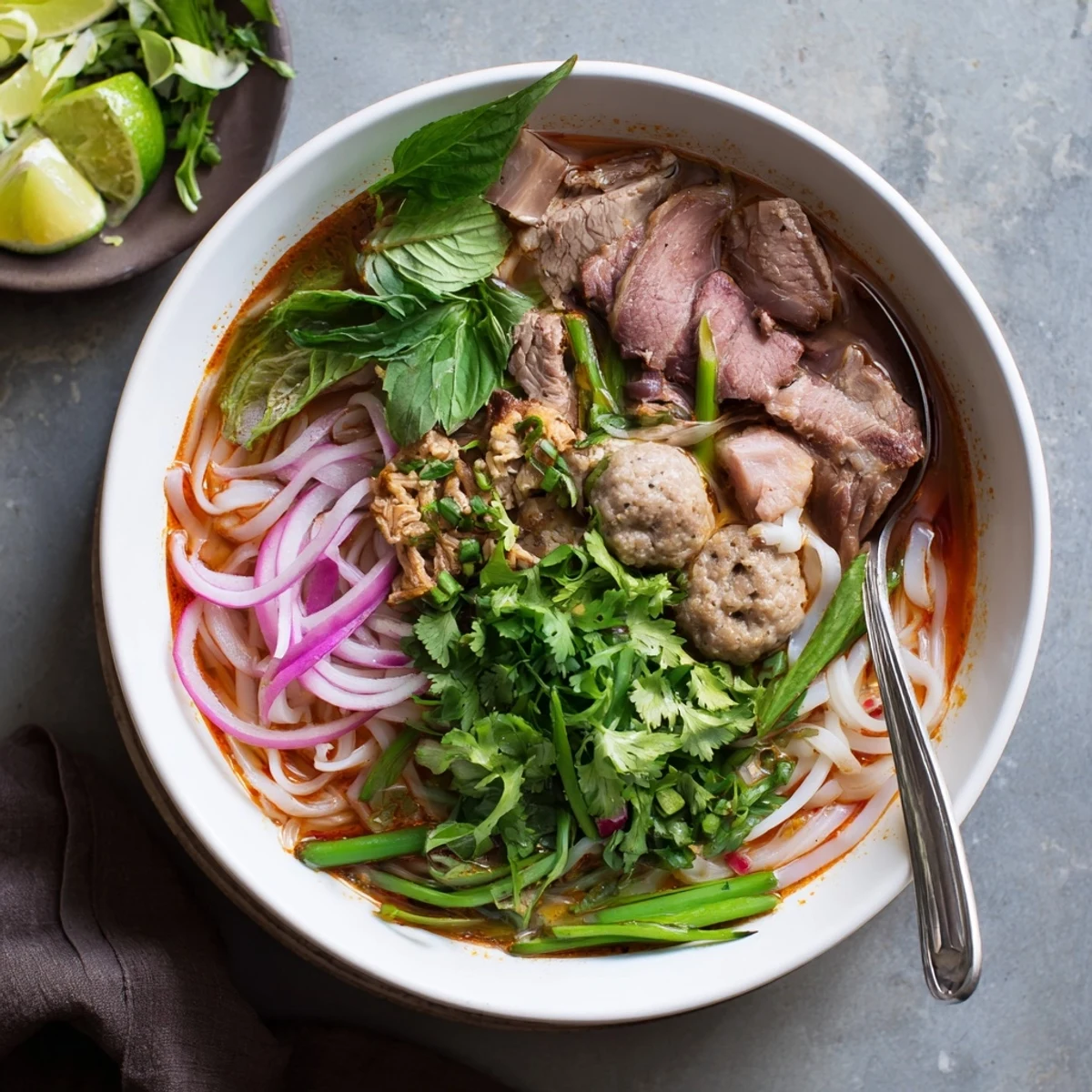
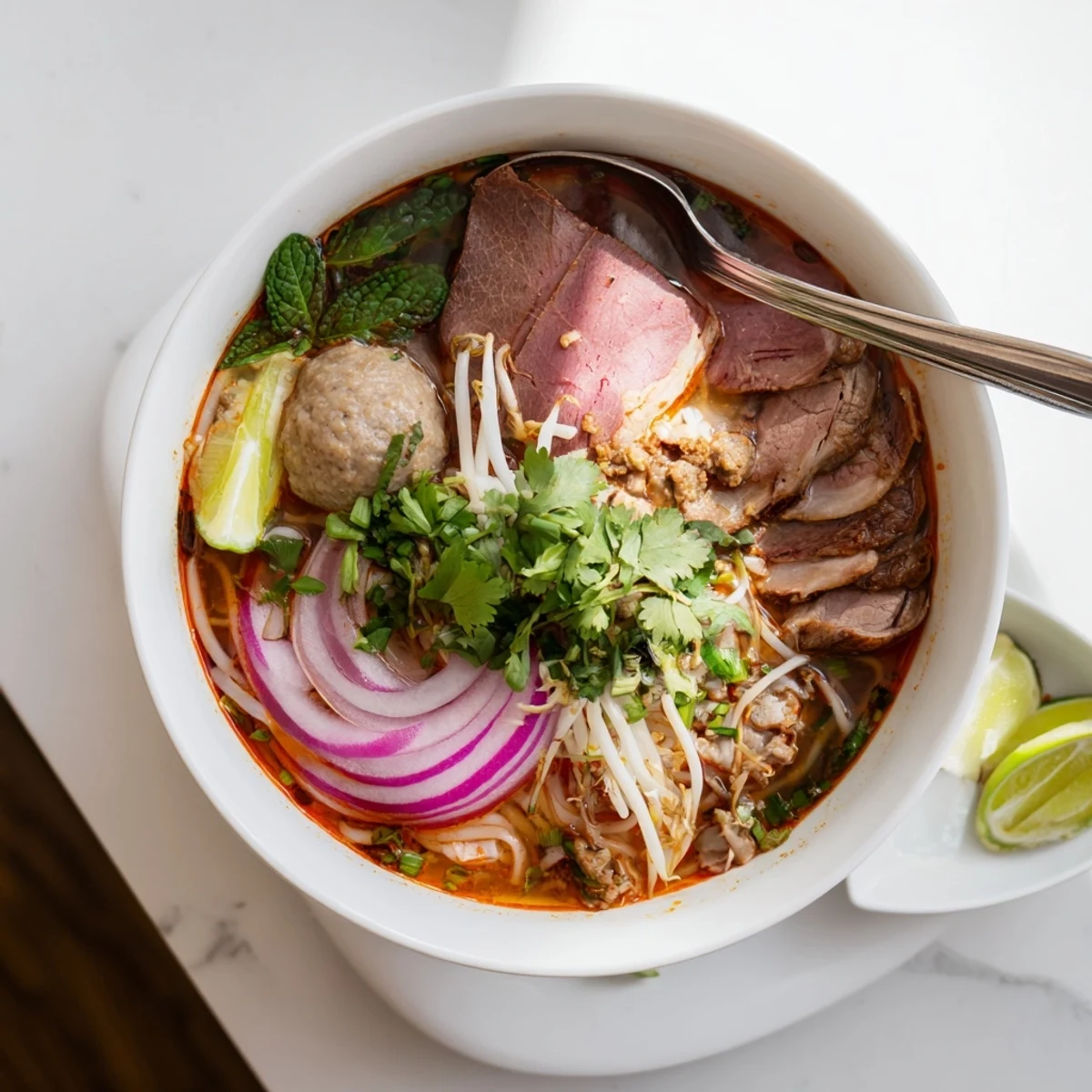
- Divide the noodles among six waiting bowls, arranging the beef shank, pork hock, brisket, blood cubes, and cha lua slices on top. Ladle the piping hot broth over everything, watching the steam rise and carry that intoxicating lemongrass perfume. Finish each bowl with a generous drizzle of your crimson chili oil, letting it ripple across the surface like liquid sunset.
- Garnish generously:
- Set out bowls of thinly sliced red onion, lime wedges, bean sprouts, banana blossom, mixed fresh herbs, scallions, and fresh chilies. Let everyone customize their own bowl, squeezing lime into the broth, tearing herbs directly over the steam, and adding as much or as little chili as their palate desires.
 Save to Pinterest
 This soup has become my answer to everything, from hangovers to homesickness, from celebration days to quiet Tuesdays when I need something that feels like a hug in a bowl. The act of assembling it, even just for myself, connects me to kitchens across oceans and generations.
Finding the Right Noodles
I once substituted regular rice noodles because I could not find the thick round ones, and the entire experience felt diminished. The substantial texture of proper bun bo noodles is essential, holding up to the robust broth in a way that thinner strands simply cannot.
Broth Depth Secrets
A small piece of pineapple added during the last hour of simmering introduces a subtle sweetness that balances the heat and salt. It is the kind of adjustment that does not read obviously on the ingredient list but makes people ask what makes this version taste so complete.
Perfecting Your Bowl
Let your guests build their own experience with the garnishes, but remind them that the first spoonful should be taken plain to appreciate the broth as it was intended. The additions should enhance, not overshadow, the hours of simmering that went into that red fragrant liquid.
- Prepare all garnishes before you start assembling the bowls so everything is ready at hand.
- Keep the broth at a rolling simmer while you assemble so it pours piping hot over the noodles.
- Serve immediately, because these noodles will continue to soften if they sit too long in the broth.
 Save to Pinterest
 I hope this recipe finds its way into your regular rotation, becoming the bowl you turn to when you need something that feels both nourishing and thrilling all at once.
Recipe FAQs
- → What makes Bun Bo Hue different from pho?
-
Bun Bo Hue originates from central Vietnam and features a spicier, bolder broth with lemongrass and shrimp paste. Unlike pho's clear, anise-scented broth, Hue-style soup includes thicker round noodles, pork hock, beef shank, and signature red chili oil for added depth and heat.
- → Can I make this less spicy?
-
Absolutely. The chili oil is served on the side, allowing everyone to adjust heat to their preference. You can also reduce chili flakes in the oil or omit the sliced birds eye chili garnish. The broth itself has mild spice from aromatics but remains family-friendly.
- → What can substitute for shrimp paste?
-
Shrimp paste provides essential umami depth. If unavailable, use additional fish sauce or a small amount of miso paste. The flavor won't be identical, but you'll still achieve a rich, savory broth characteristic of this regional specialty.
- → Are pork blood cubes necessary?
-
Not at all. Pork blood cubes are traditional but entirely optional. Many home cooks and restaurants omit them, focusing instead on the quality meats and flavorful broth. The dish remains delicious and authentic without this ingredient.
- → Can I shorten the cooking time?
-
While possible, the 2-hour simmer develops essential flavor depth. For quicker results, use pressure cookers to reduce broth time to 45 minutes, though the traditional stovetop method yields the most complex, restaurant-quality results worth the extra time.
- → What thick rice noodles should I use?
-
Look for bun bo Hue noodles, which are thicker than standard vermicelli but thinner than udon. Asian markets carry them fresh or dried. If unavailable, pad thai noodles or thick rice vermicelli make acceptable substitutes, though texture will differ slightly.